Section 21 Deadline 31 July 2026: What Landlords and Tenants Need to Know

Key Facts
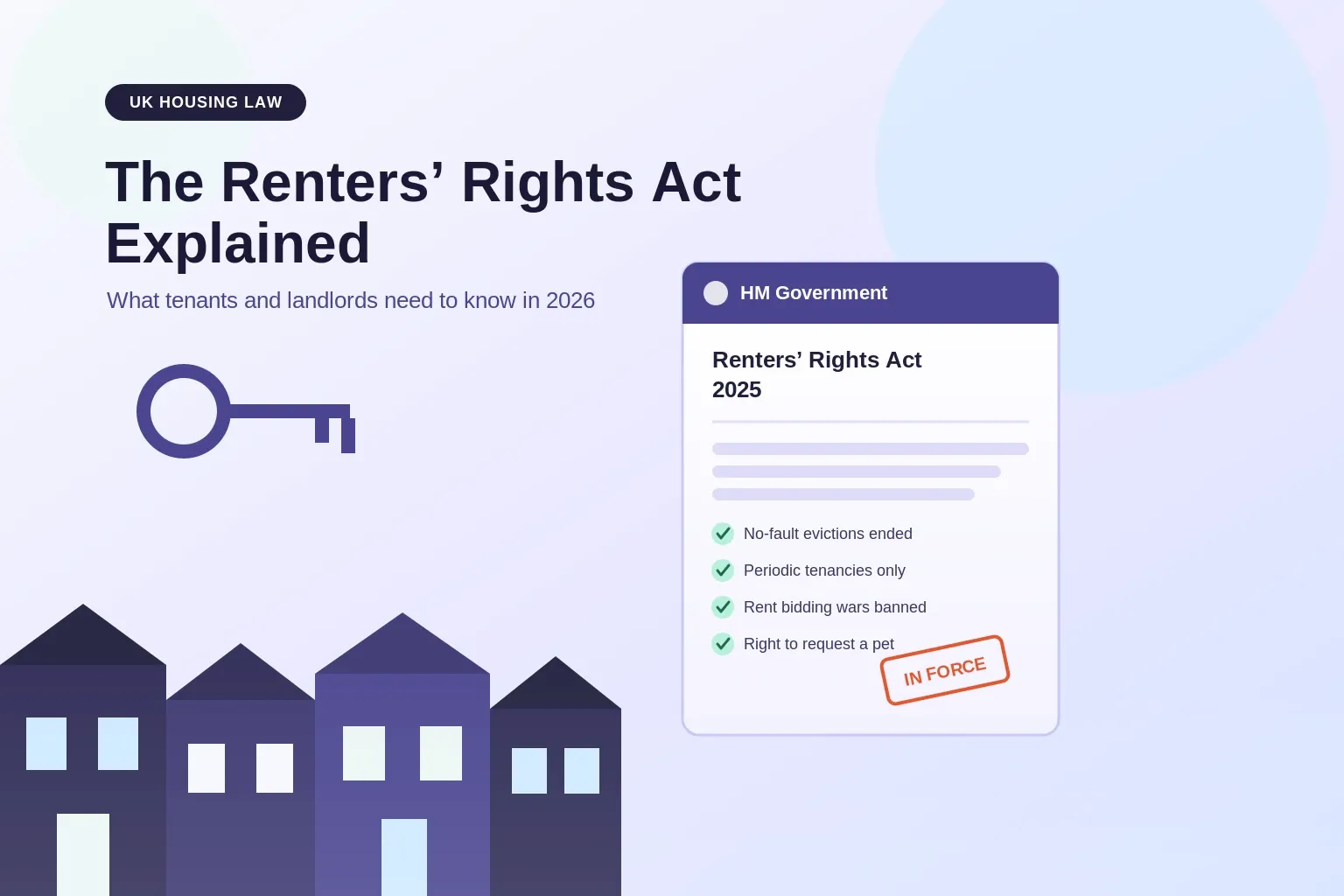
- Section 21 was abolished for private tenancies in England from 1 May 2026 under the Renters' Rights Act 2025.
- A Section 21 notice only remains usable if it was validly served before 1 May 2026.
- Court proceedings based on that notice must normally begin by 31 July 2026, or six months from the date the notice was served, whichever is earlier.
- Missing the applicable deadline means the landlord can no longer rely on that notice and must use a Section 8 ground instead.
- These rules apply to private renting in England only. Scotland, Wales and Northern Ireland have their own separate housing laws.
Section 21 no longer exists for private tenancies in England. It was abolished on 1 May 2026 by the Renters' Rights Act 2025, and landlords can no longer serve a new one. The date that now matters most is 31 July 2026, the transitional court deadline for any notice that was already served before the law changed, though some notices carry an earlier cut off of their own. This article explains what the Section 21 deadline 2026 means in practice for landlords, tenants and letting agents. It is general information, not individual legal advice.
Quick answer: Can landlords still use Section 21 in 2026?
No. Landlords in England cannot serve a new Section 21 notice after 1 May 2026. A notice served validly before that date can still be used, but only if court proceedings begin by 31 July 2026, or within six months of the notice being served, whichever comes first. After that point, the notice can no longer support a possession claim and a Section 8 ground is needed instead.
Key dates table
| Date or deadline | What it means |
|---|---|
| Before 1 May 2026 | Last point at which a Section 21 notice could be validly served in England |
| 1 May 2026 | Section 21 abolished. All existing assured shorthold tenancies became assured tenancies |
| Six months from the notice date, or 31 July 2026 (whichever is earlier) | Deadline to start court proceedings using a pre commencement Section 21 notice |
| After the applicable deadline | The Section 21 notice can no longer be relied on. A new Section 8 ground and notice are normally required |
| Notice's own validity period | Every notice also has its own expiry rules, so the earlier of the two deadlines always applies |
What changed on 1 May 2026?
The Renters' Rights Act 2025 removed the "no fault" eviction route for private tenancies in England. From 1 May 2026, landlords can no longer serve a Section 21 notice, and every assured shorthold tenancy that existed on that date automatically became a rolling assured tenancy with no fixed end date. Ending a tenancy from this point onwards normally requires a landlord to rely on a specific ground for possession under Section 8 of the Housing Act 1988.
Why is 31 July 2026 important?
The 31 July 2026 deadline is the outer limit for starting court proceedings on a Section 21 notice that was validly served before the law changed. According to GOV.UK guidance, a landlord relying on a pre commencement notice must issue proceedings by whichever comes first: six months after the notice was given, or 31 July 2026. A landlord who has not applied to court by that point loses the ability to rely on that notice.
Can a landlord still rely on a notice served before 1 May 2026?
Yes, but only within strict limits. The notice must have been valid when it was served, meaning it met the usual legal requirements such as using the correct form, giving at least two months' notice, and complying with deposit protection and property compliance rules. If those conditions were not met, the notice may already have been invalid and cannot be used regardless of the deadline.
- Check the notice was served on the correct form, normally Form 6A, with the right notice period.
- Confirm the tenancy deposit was protected and the required documents, such as the Energy Performance Certificate and gas safety record, were given to the tenant.
- Work out the earlier of the two deadlines: six months from the notice date, or 31 July 2026.
- Where court proceedings have not yet started, get advice promptly, since time is limited.
How can landlords check whether a notice is valid?
A notice is only valid if it followed the rules in force when it was served, including using the correct form and notice period, and meeting compliance requirements such as deposit protection. Shelter and Citizens Advice both publish checklists tenants and landlords can use to review a notice line by line. Where there is any doubt, a solicitor or housing adviser should confirm validity before relying on the notice in court, since an invalid notice will fail regardless of the 31 July 2026 deadline.
What happens if court proceedings are not started in time?
If proceedings are not issued by the applicable deadline, the Section 21 notice can no longer be used to support a possession claim. The tenancy continues as an assured tenancy, and the landlord must start again using a valid Section 8 ground if they still want to regain possession. This can mean a delay of several months while a fresh notice is served and, if needed, a new court application is prepared.
Need a property professional you can trust?
Matchouse connects landlords, tenants and letting agents with vetted property professionals across England. Create a free profile to find support with lettings, compliance and more.
Get Started with Matchouse
What replaced Section 21?
Section 21 has been replaced by a strengthened Section 8 possession process. Under the Renters' Rights Act 2025, the grounds for possession under Section 8 of the Housing Act 1988 were revised and expanded to cover situations such as selling the property, a landlord or close family member moving in, rent arrears and anti-social behaviour. Landlords must state a specific ground and provide supporting evidence, and tenants generally cannot be evicted using these grounds within the first 12 months of a tenancy.
When can a landlord use Section 8?
A landlord can use Section 8 whenever they have a valid ground for possession, such as persistent rent arrears, a wish to sell the property, or a need to move back in themselves. Each ground has its own notice period and evidence requirements. Some grounds are mandatory, meaning the court must grant possession if the ground is proven, while others are discretionary, meaning the court weighs up whether it is reasonable to grant possession.
What landlords should do before taking action
- Establish whether a Section 21 notice was served before 1 May 2026 and whether it was valid.
- Calculate the applicable deadline, remembering that it is the earlier of six months from the notice or 31 July 2026.
- If the deadline has passed or is about to pass, identify which Section 8 ground applies instead.
- Gather evidence to support that ground, such as rent statements, correspondence or a solicitor's letter confirming an intention to sell.
- Take advice from a solicitor or qualified letting professional before issuing court proceedings.
What tenants should do after receiving a notice
- Check the date the notice was served and whether it was issued before 1 May 2026.
- Confirm the notice followed the correct form and process, since an invalid notice cannot be relied on.
- Remember that a notice expiring does not mean an automatic obligation to leave immediately. A landlord generally needs a court possession order, and if the tenant does not leave voluntarily, bailiffs must be instructed to enforce it.
- Contact the local council, Citizens Advice or Shelter for free advice, particularly if court proceedings have already started.
- Keep records of the notice, any correspondence and rent payments in case they are needed later.
How letting agents should manage transitional cases
Letting agents handling live possession cases should audit every Section 21 notice issued before 1 May 2026 and flag the applicable deadline for each one. Where the six month or 31 July 2026 deadline is close, proceedings should be prioritised or landlords should be advised to prepare a Section 8 case in parallel. Clear, dated records of rent payments and communications will support either route if the case needs to change track.
Common mistakes landlords and tenants should avoid
- Assuming a notice automatically remains valid for as long as its original notice period suggests, without checking the 31 July 2026 cut off.
- Waiting until close to the deadline to start court proceedings, leaving no time to fix paperwork errors.
- Believing that a notice expiring means a tenant must leave that day. A court order, and usually a bailiff appointment, is normally required if the tenant does not leave voluntarily.
- Taking matters into their own hands, such as changing locks or disconnecting utilities. This is not lawful and can expose a landlord to serious penalties.
- Tenants ignoring a notice entirely rather than seeking advice, which can reduce the time available to plan a move or challenge an invalid notice.
Frequently asked questions
Can a landlord serve a Section 21 notice in 2026?
No. Section 21 was abolished in England from 1 May 2026, so landlords cannot serve a new Section 21 notice from that date onwards. Any possession claim started after 1 May 2026 must rely on a valid Section 8 ground instead.
Is a Section 21 notice served before 1 May 2026 still valid?
It can be, provided it met all the legal requirements when it was served. Even a valid notice only remains usable if court proceedings begin by 31 July 2026 or within six months of the notice date, whichever is earlier. After that, the notice can no longer be relied on.
What happens after the 31 July 2026 deadline?
After 31 July 2026, landlords can no longer start or rely on court proceedings based on a pre commencement Section 21 notice. Any tenancy still in place becomes a full assured tenancy, and a Section 8 ground is required to seek possession going forward.
Does a tenant have to leave when a Section 21 notice expires?
No, not automatically. The end of the notice period is not the same as the end of the tenancy. If the tenant does not leave voluntarily, the landlord must apply to court for a possession order, and bailiffs are usually needed to enforce it if the tenant still remains.
Can a landlord use Section 8 instead?
Yes. Section 8 of the Housing Act 1988 allows a landlord to seek possession where a specific ground applies, such as rent arrears, sale of the property, or anti-social behaviour. The landlord must give the correct notice period for that ground and be ready to provide evidence in court.
What if the Section 21 notice was invalid?
An invalid notice, for example one using the wrong form or issued without deposit protection in place, cannot be relied on regardless of the 31 July 2026 deadline. Tenants who are unsure should ask Shelter, Citizens Advice or a solicitor to check the notice before assuming it is enforceable.
Do the same rules apply in Scotland, Wales and Northern Ireland?
No. This article covers private renting in England only. Scotland, Wales and Northern Ireland each have their own separate housing and eviction laws, with different notice types, timescales and legal frameworks.
Where can landlords and tenants obtain legal advice?
Citizens Advice and Shelter both offer free, independent guidance on possession notices and tenancy rights. Landlords with complex portfolios or disputed cases are usually best advised to speak to a solicitor who specialises in housing law before issuing or responding to court proceedings.
Sources and further guidance
- GOV.UK: Notices of possession served before 1 May 2026, a guide for tenants renting from a private landlord
- GOV.UK: Giving notice of possession to tenants before 1 May 2026
- GOV.UK: The Renters' Rights Act Information Sheet 2026
- legislation.gov.uk: Renters' Rights Act 2025
- Citizens Advice: If you get a Section 21 eviction notice from a private landlord
- Shelter England: Section 21 eviction
- House of Commons Library: Renters' reform in England, what's happening and when
For a wider look at the Renters' Rights Act 2025, see our full guide: The Renters' Rights Act 2025: What Tenants and Landlords Need to Know. If a landlord is selling a tenanted property, our guide to tenants' rights when a landlord sells explains how that process works alongside these rules. For the wider tenancy contract itself, see tenancy agreement essentials for UK renters.
Disclaimer: This article provides general information about private renting in England and does not constitute legal advice. Landlords and tenants should obtain advice based on their individual circumstances before taking action.
Facing a possession case or a Section 21 deadline?
Whether you need a solicitor, a letting agent or help finding your next home, Matchouse can connect you with property professionals across England, free to get started.
Find Property Professionals