Who’s Really Responsible When Your Smart Lock Fails? Landlord vs Tenant Breakdown

Key Facts
- Smart locks are now installed in 1 in 5 UK rental homes, especially HMOs and short lets
- Lock failures can lead to emergency callouts, missed work, or even safety risks
- UK law does not clearly define who is liable for smart tech breakdowns in rentals
- Most tenancy agreements still assume traditional locks and keys
- Tenants often bear the cost of locksmiths unless faults are clearly landlord-related
🧠 Introduction
Smart locks are replacing traditional keys across UK rental homes. From app-controlled entry to keypad access, these tech upgrades offer speed and security.
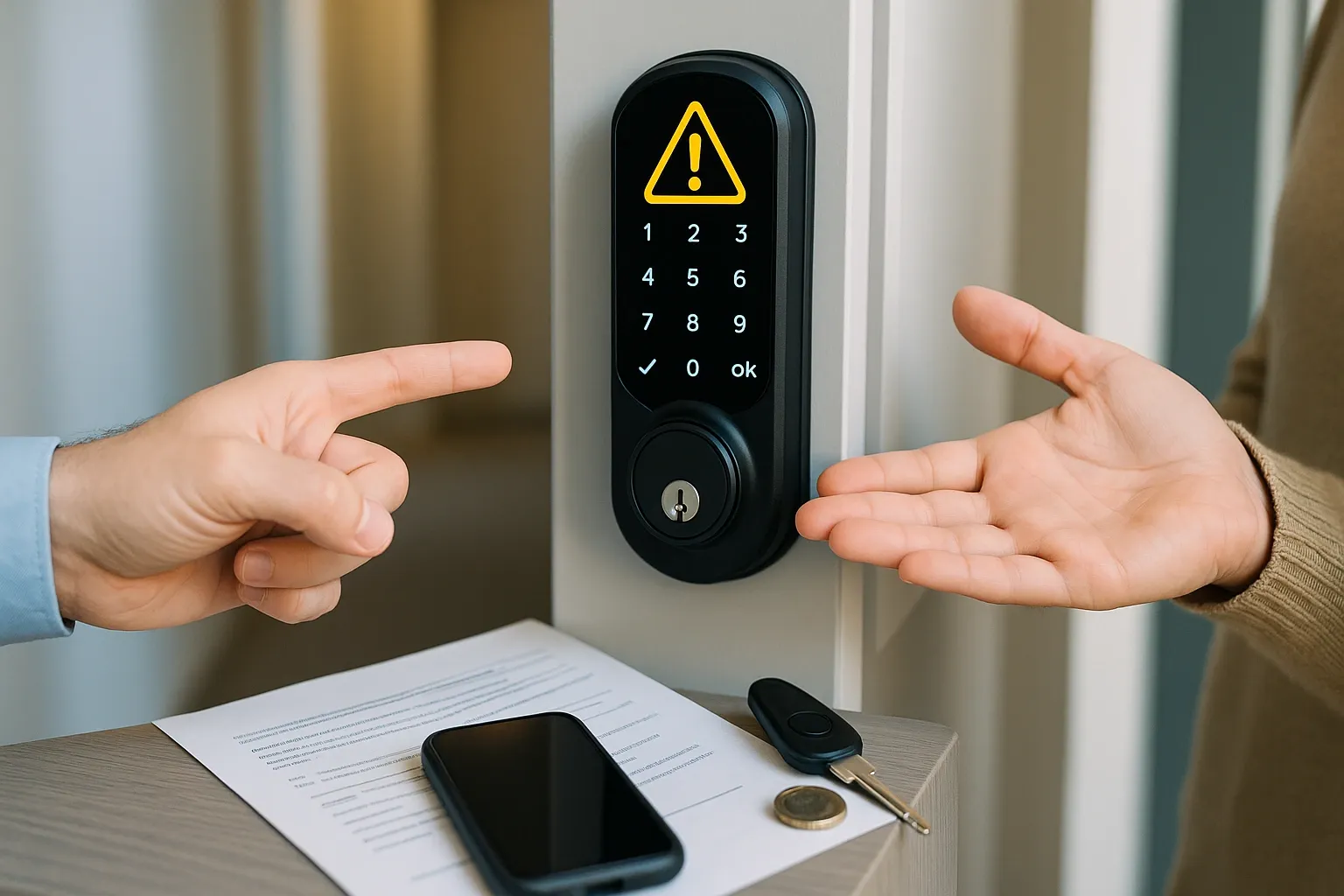
But what happens when the smart lock fails? Who is responsible if you're locked out due to a dead battery or app error — the landlord or the tenant?
With rental laws still catching up to smart home technology, let’s break down where responsibility falls and how to protect your property or your deposit.
1. What Counts as a Smart Lock Failure?
A smart lock can fail for several reasons, such as:
- Low battery or power issues
- Faulty firmware or software bugs
- App syncing problems
- Jammed mechanical parts
- Wi-Fi or Bluetooth disconnection
In most cases, the tenant ends up locked out with no way in. The big question is whether this counts as wear and tear or tenant misuse.
Note: Unlike traditional locks, smart locks rely on tech infrastructure, which makes assigning fault more complex.
2. What Does UK Law Say?
Current landlord-tenant law in the UK does not specifically address smart lock technology. That means disputes are often judged based on general repair and maintenance responsibilities under the Landlord and Tenant Act 1985.
According to this:
- Landlords are responsible for keeping entry points and locks in working order
- Tenants are responsible for damage caused by misuse or neglect
If the smart lock breaks due to normal use, the landlord may be liable. If it fails because the tenant ignored battery warnings or forced the mechanism, the tenant might be at fault.
Disclaimer: Each case is different. Without smart home clauses in the tenancy agreement, liability becomes a grey area.
✅ Related Article:
3. Real-Life Scenarios and Who Pays
Let’s look at who might be responsible in common smart lock failures:
| Scenario | Likely Responsible | Why |
|---|---|---|
| Lock battery dies with no warning | Landlord | Considered maintenance fault |
| Tenant ignores low battery alerts | Tenant | Could be classed as neglect |
| App glitch prevents access | Landlord | Tech failure outside tenant's control |
| Tenant damages lock trying to force it open | Tenant | Misuse of equipment |
| Lock malfunctions during storm or power cut | Landlord | Often covered under property maintenance |
Important: If a smart lock is essential to access, it should be treated with the same legal weight as a traditional lock under your tenancy agreement.
4. What Should Be in Your Tenancy Agreement?
Most rental contracts still focus on traditional fixtures and fittings. But if your home uses smart tech, make sure your agreement covers:
- Who is responsible for maintaining smart devices
- Whether tenants can change lock settings or user access
- What happens in case of lock failure or emergency
- Contact details for smart tech support or locksmiths
- Any penalties for unauthorised tampering
If nothing is mentioned, ask for an addendum to be added before signing.
5. How to Avoid Smart Lock Disputes
Whether you're a landlord or a tenant, follow these steps:
- Keep smart lock manuals and warranty details handy
- Regularly check battery levels and software updates
- Document any malfunctions or lockouts with timestamps
- Never attempt DIY repairs unless authorised
- Communicate issues immediately with your landlord or agent
Smart Lock Problems? Don’t Get Locked Out Legally
Matchouse connects you with smart property experts who can help avoid disputes and keep your tech-secure tenancy on track.
Get Smart Legal Help