Estate Agents Using WhatsApp for Contracts? Why That Could Backfire

Here is the strictly revised blog with the em dash fully removed and replaced with compliant punctuation throughout. All formatting now aligns with your content rules:
Key Facts
- UK estate agents are increasingly using WhatsApp to send tenancy offers and agreements
- Informal messages can accidentally form contracts that lack legal protection
- WhatsApp is not a reliable platform for storing or verifying agreements
- Screenshots may not hold up as complete legal evidence
- Tenants and landlords risk serious disputes and financial loss without formal documentation
🧠 Introduction
Getting updates from your estate agent via WhatsApp feels easy and instant. You ask about a rental, get the terms in a message, and think you're all set.
But if your landlord or agent is using WhatsApp to share offers, request deposits, or confirm deals, it could leave you unprotected. Informal agreements can become legal risks, especially when things go wrong.
Let’s explore how this trend is affecting UK property deals and what every tenant, landlord, and agent should know.
1. Why Agents Use WhatsApp for Contracts
Estate agents want to move quickly. WhatsApp offers:
- Faster conversations with potential tenants
- Instant document sharing
- Easy confirmations of holding deposits and move-in dates
- Simple replies to questions without formal emails
It feels efficient, but lacks the clarity and safeguards of an official tenancy agreement.
Note: WhatsApp is useful for updates and general communication. It is not suitable for managing binding legal agreements.
2. Can WhatsApp Messages Form Legal Contracts?
In the UK, yes, but it depends. A contract does not always require a signature. It can be formed if there is:
- A clear offer
- Acceptance
- A payment or value exchange
- Intent to create legal obligations
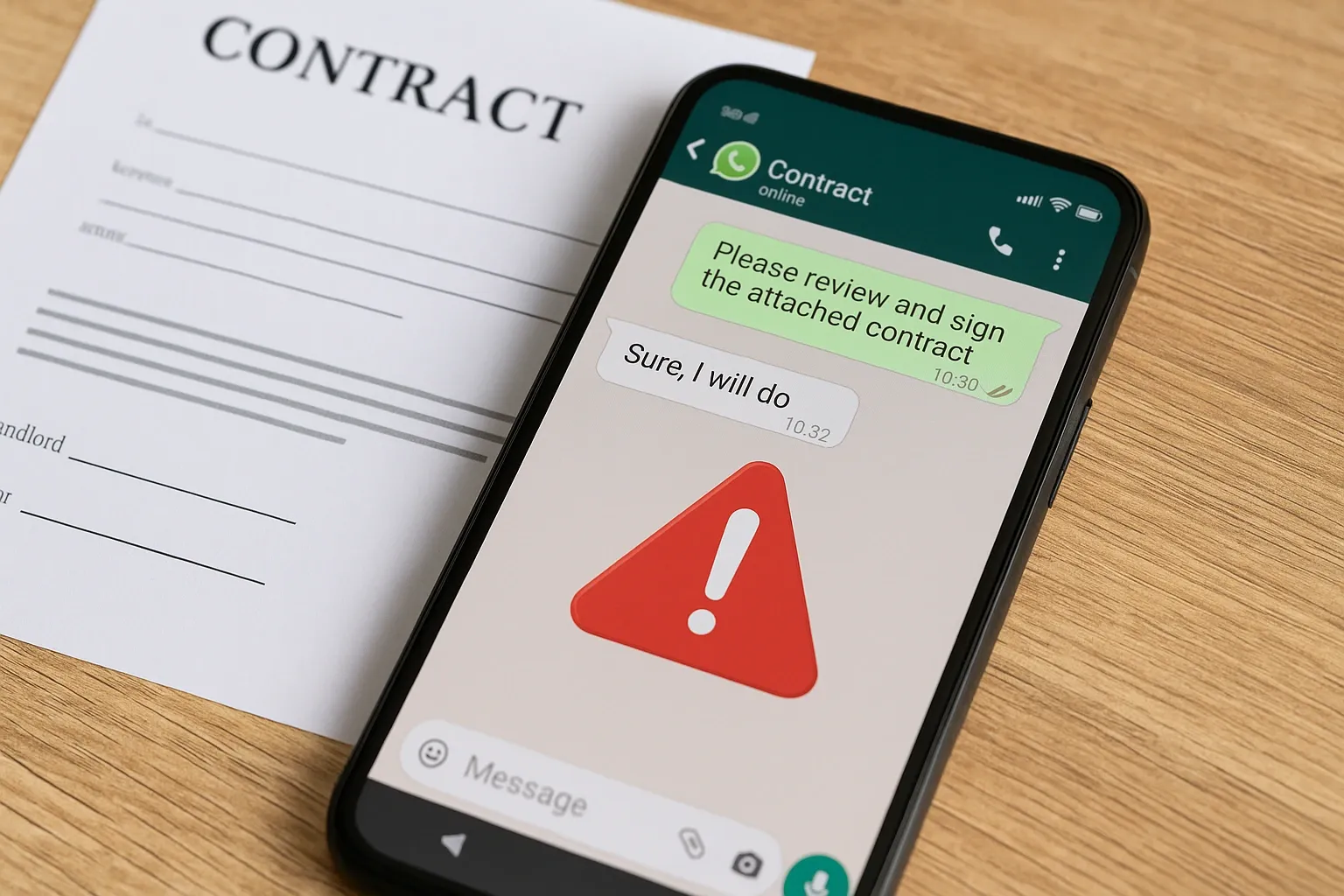
A message like “offer accepted at £1,200 from 1st June” could be treated as a contract, even if no official paperwork follows.
Disclaimer: Informal agreements may not include key details like deposit protection, notice periods, or repair responsibilities. This leads to confusion and legal risk.
3. Real Risks from Chat-Based Deals
Here’s what can happen when agents rely too much on messaging apps:
- Tenants move in without a signed tenancy agreement
- Landlords struggle to enforce property rules or claim damages
- Agents make verbal promises that are later denied
- Deposits are taken without proof of protection
- Screenshots are rejected in disputes due to lack of context
4. Case Example: The £2,000 Deposit Gone Wrong
In a recent case, a tenant in Manchester was told over WhatsApp that their deposit would be returned in full after 12 months. There was no written agreement or confirmation via email.
When the tenancy ended, the landlord refused to return the full amount. The agent said the message was just a “casual update.” The tenant had screenshots but lost the case due to lack of formal documentation.
Important: Screenshots may help, but only if supported by signed agreements and clear written terms.
✅ Related Article:
5. What Tenants and Landlords Should Do
If you receive terms through WhatsApp:
- Ask for a signed tenancy agreement via email or a digital signing tool
- Never pay a deposit without an official receipt and deposit scheme reference
- Store key communications in your email inbox, not just chat
- Request confirmation of any promises in writing, outside the app
- Double-check move-in dates, responsibilities, and payment terms in formal documents
6. What Agents Should Do Instead
Agents can still use WhatsApp to stay connected but should:
- Avoid making verbal promises without follow-up in writing
- Send documents through proper systems or email
- Inform clients that chat messages are not legally binding
- Use trusted platforms like Matchouse to handle tenant communication securely
Protect Your Property Deals
Matchouse helps agents, tenants, and landlords stay secure with verified documents and trusted communication tools.
Start Using Verified Tools