Do You Need Planning Permission for a Garden Room in 2025? What Homeowners Miss

Key Facts
- Most garden rooms in the UK do not need planning permission, but there are strict limits
- Rules vary if the room is used for sleeping, business, or is too large
- Buildings over 2.5m tall or close to boundaries often require approval
- Local councils can issue enforcement notices for unapproved structures
- In 2025, many homeowners still miss key conditions and face unexpected costs
🧠 Introduction
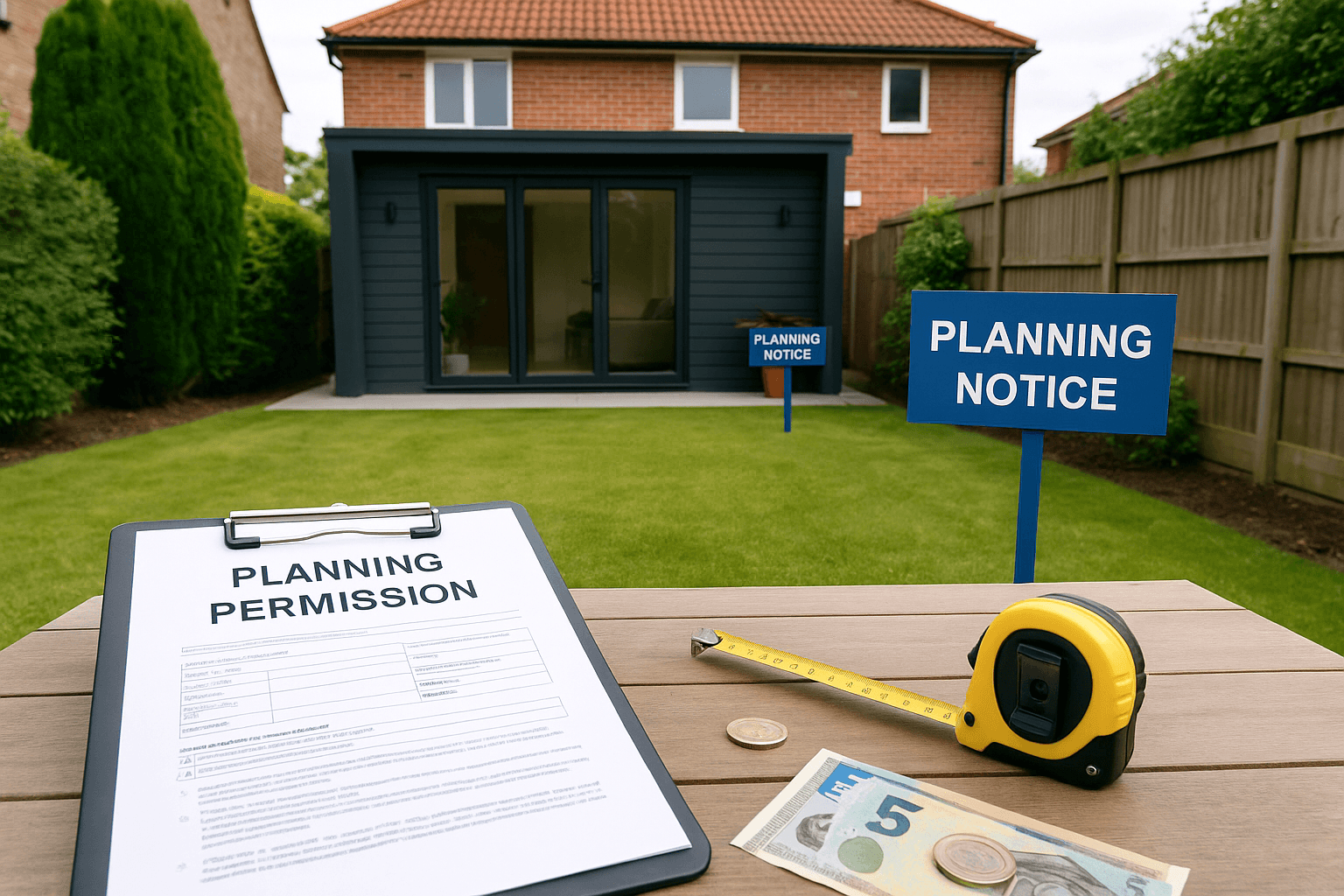
Garden rooms are one of the fastest-growing home trends in the UK. Whether used as a home office, gym, studio, or chill-out space, they offer flexibility without the hassle of full extensions.
But thousands of homeowners still get it wrong. Many assume no permission is needed and later face fines or orders to remove the structure.
Let’s break down when you do and don’t need planning permission for garden rooms in 2025 and how to avoid common mistakes.
1. What Counts as a Garden Room?
A garden room is a detached, insulated structure in your garden designed for year-round use. It’s more advanced than a basic shed or summerhouse.
Common uses include:
- Home offices
- Yoga or hobby studios
- Garden bars or lounges
- Airbnb guest spaces
- Music or gaming rooms
Tip: The intended use of your garden room affects the planning rules. Rooms used for sleeping or business often require permission.
✅ Related Article:
2. When You Don’t Need Planning Permission
Many garden rooms fall under Permitted Development Rights, so you won’t need formal approval if the structure:
- Is single-storey and under 2.5m high (if within 2m of boundary)
- Does not take up more than 50 percent of your total garden
- Is not intended as a self-contained living unit
- Is placed at the rear of your property
- Is not part of a listed building or conservation area
🔗 Gov.uk: Planning Permission - Outbuildings
3. When Planning Permission Is Required
You will likely need planning permission if:
- The building is over 2.5 metres and close to a boundary
- It includes facilities for sleeping or long-term use
- It will be used for commercial activity or let out
- You live in a conservation area or listed building
- It’s built closer to the road than your main house
Disclaimer: Always check your local council’s planning portal before building. National rules apply, but local interpretations may differ.
🔗 Find Your Local Planning Authority
4. Common Mistakes Homeowners Make
Even experienced homeowners overlook key planning issues. Common mistakes include:
- Building too close to shared boundaries
- Installing plumbing or electrics without checks
- Turning the space into sleeping accommodation
- Assuming small structures are always exempt
- Ignoring visibility rules for corner plots or roads
5. What Happens If You Build Without Permission?
If your build breaks the rules, your local authority can issue an enforcement notice. You may be ordered to:
- Apply for retrospective planning permission
- Alter the structure to comply with the rules
- Remove the garden room entirely
🔗 Planning Enforcement: Gov.uk Guide
Important: Even if your builder assures you it's legal, the homeowner is held responsible for compliance.
Planning a Garden Room?
Matchouse connects you with vetted experts who understand UK planning law and can guide you through the legal, design, and build process.
Get Expert Help Now